
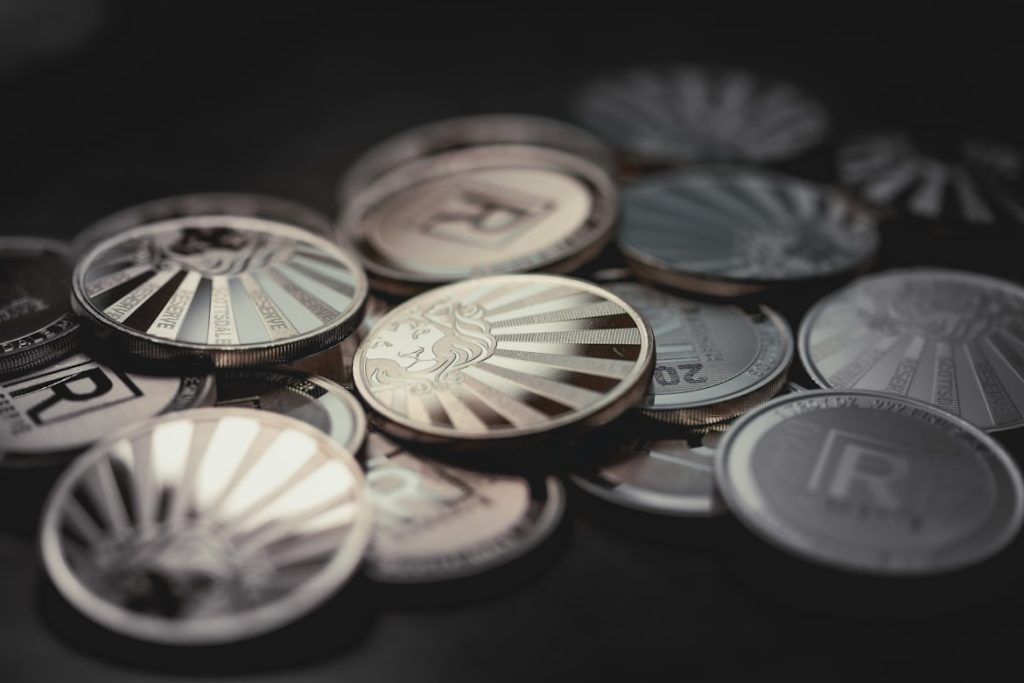
Valuable American coin years refer to specific mint years where coins are rare due to low mintage, errors, or historical significance.
Key Takeaways
- Morgan Dollars were minted from 1878 to 1904 and again in 1921.
- Pre-1965 U.S. coins often contain 90% silver.
- Low-mintage years can significantly increase coin value.
Wandering around Las Vegas, you may have noticed plenty of stores offering to buy old jewelry and coins. Perhaps you’ve even thought you might peruse the coins you have sitting at home, to see if there’s anything valuable you can sell for some extra cash.
However, how do you know which coins are worth something on the market? Unless you’re an avid coin collector, it can be hard to know what makes one kind of mint or year of issue much more valuable than another. Well, wonder no more because the Las Vegas Jewelry and Coin Buyers team is here to provide this quick, handy guide to some valuable american coin years that’ll make your task easier.
It may surprise you to learn that coins don’t have to be centuries old to be worth a lot of money. If you want a broader overview of modern collecting before diving in, check out our post on coin collection in Nevada.
1. 1914-D Lincoln Wheat Cent

Why Is the 1914-D Lincoln Wheat Cent So Valuable?
Coins by Richard Elzey is licensed with CC BY 2.0
Let’s start with one of the oldest coins on our list and work our way forward. It may surprise first time coin collectors to know that something as small as a penny could be worth a lot of money today, but in fact, many pennies will pop up on this list, as their ever-changing design and other features mean there are a lot of rare pennies circulating out there.
The Denver Mint made a relatively small volume of the 1914-D penny, with only 1,193,000 pennies being minted. You can identify it by looking to the right of Lincoln’s head, where under the year 1914 you should see a D, indicating the mint of origin. Today, one of these pennies can get you at least $175, if not more depending on the buyer. To see how this fits into the broader landscape of rare dates, you can also explore our article on valuable american coin years.
2.1916 Standing Liberty Quarter
The Standing Liberty quarter was first designed and minted in 1916, making it the year of its debut. Social mores of the time pressured the U.S. Mint in 1917 into changing the design to cover up the exposed breast on Lady Liberty.
This means that the 1916 Standing Liberty quarters are pretty much the only ones that retain the original design of Lady Liberty and therefore quite rare. In the coin collecting world, anything that’s rare tends to also be worth a lot; today, just one of these quarters can fetch you at least $2,800.
What Makes the 1916 Standing Liberty Quarter So Special?
The Standing Liberty quarter was first designed and minted in 1916, making it the year of its debut. Social mores of the time pressured the U.S. Mint in 1917 into changing the design to cover up the exposed breast on Lady Liberty.
This means that the 1916 Standing Liberty quarters are pretty much the only ones that retain the original design of Lady Liberty and therefore quite rare. In the coin collecting world, anything that’s rare tends to also be worth a lot; today, just one of these quarters can fetch you at least $2,800. If high-value quarters interest you, our guide on the most valuable U.S. coins provides even more key dates to watch for when you’re sorting your change.
3.1916-D Mercury Dime
Why Is the 1916-D Mercury Dime a Key American Coin?
Apparently, 1916 was quite a year for U.S. coins in general. The U.S. Mint introduced the Winged Liberty Head design on denominations of 10 cents, which was nicknamed the “Mercury” dime afterwards, as many people mistook the head on the flip side for the Roman god Mercury.
The Denver Mint only produced 264,000 of these coins, making the 1916-D Mercury dime incredibly rare nowadays. Check your coin jar to see if you have any floating around in there, as just one Mercury dime from this year can net you over $800.
If you’re curious about the broader market for pieces like this, our post on coin buyers in Las Vegas explains how experienced buyers assess rarity and demand.
4. 1932-D and 1932-S
Why Do 1932-D and 1932-S Washington Quarters Matter?
Although to us it may seem that Washington has been on our money forever, George Washington’s head appeared on the ubiquitous quarter for the first time in the year 1932. D and S indicate the mints of origin, with D placed on coins minted in Denver and S placed on coins minted in San Francisco.
Fun fact: Did you know the design featuring Washington was meant to be temporary when it was first introduced? Well, the U.S. Mint intended it to be struck on quarters for just a year, but it remains the design we use to this day.
The Denver Mint only struck a total of 436,800 Washington quarters that year, while the San Francisco Mint struck a total of 408,000, making them both pretty rare in relation to the total volume of coins in the U.S. If you find one today, you can get at least $80–85 for each one of them.
For collectors aiming to build a focused set of rare quarters and other american coin highlights, our article on coin collecting trends can help you understand what today’s market is looking for.
5.1955 Lincoln Cent
What Is the 1955 Lincoln Cent Doubled Die Obverse?
The title may already have you confused as to what this coin is, but it’s actually quite simple. In 1955, the U.S. Mint made an error known as die doubling. You can tell if a coin is doubled die obverse (DDO) by looking closely at the word “Liberty,” the numbers of the year, and the phrase “In God We Trust” embossed on the top of the portrait side of the coin, surrounding Lincoln’s head.
Coins that have this error will show all these elements cast twice into the coin, almost on top of each other but not quite, creating a shadow-like effect. Many Lincoln pennies from 1955 contain this error, so if you find one minted in the year, get to a coin dealer as you could get $1,000 or more from this penny. Either look at them very closely or hold the pennies up to a magnifying glass to see if the error exists, as it can be barely noticeable in some.
If you’re truly unsure, check with your local coin buyer. You can also review our guide on how to grade coins so you understand how condition impacts the value of these error varieties.
6. 1969-S Lincoln Cent
Why Is the 1969-S Lincoln Cent Doubled Die So Valuable?
In 1969, the San Francisco Mint struck some doubled die Lincoln pennies, so they were out and about circulating in the economy again. However, because the San Francisco Mint made so few of them, they’re exceedingly rare and incredibly valuable. If you come across one of them, you could get over $25,000 for just one penny.
Collectors hunting for these major varieties often also keep an eye on valuable rare nickels and other denominations that can quietly add significant value to an american coin collection.
7. 1972 Lincoln Cent
What About the 1972 Lincoln Cent Doubled Die Obverse?
Apparently, the U.S. Mint didn’t learn its lesson the first time and made the same die doubling error with Lincoln pennies in 1972. These coins are worth about $300 each. Because the Philadelphia Mint that struck these coins made the error with several pennies, and they’re relatively more common to find circulating considering their more recent year of mintage, the price for each is lower than the other two DDO pennies.
Next time you’re rummaging through your coin jar or just the loose change in your pockets, wondering if you accidentally have something rare and valuable on your hands, we hope you use our handy guide to check. If you’re still unsure and want to get your coin valued in Las Vegas, Nevada, contact us at Las Vegas Jewelry and Coin Buyers to get a professional opinion.
We’re always happy to help. For an idea of what a complete rare set might be worth, our post on the most valuable coin collections is an eye‑opening read, and you can always browse our main coins and currency page to see the kinds of pieces we handle every day.
Frequently Asked Questions (FAQ)
What makes an american coin “valuable” instead of just old?
An american coin becomes truly valuable when factors like rarity, demand, historical significance, and condition line up; a relatively modern coin with a low mintage or major error can be worth far more than a much older but common piece.
How can Las Vegas Jewelry and Coin Buyers help me with my american coin finds?
Las Vegas Jewelry and Coin Buyers can examine your coins, identify key dates and mint marks, explain current market demand, and offer fair, competitive prices if you decide to sell any of your american coin treasures.
Do I need to clean my coins before bringing them to Las Vegas Jewelry and Coin Buyers?
It’s usually best not to clean coins, since cleaning can scratch the surface or remove original patina and actually reduce value; instead, bring your american coin collection to Las Vegas Jewelry and Coin Buyers in its original state for a proper evaluation.
How can I avoid buying fake or altered american coin pieces?
Buying from reputable dealers, learning basic authentication tips, and comparing suspicious coins to verified images can help; you can also review our guide on how to avoid buying counterfeits before making any significant purchase.
When should I bring my american coin collection to Las Vegas Jewelry and Coin Buyers?
If you discover key dates like the ones in this guide, inherit a collection, or simply want to know what your coins are worth in today’s market, that’s a great time to visit Las Vegas Jewelry and Coin Buyers for a professional appraisal and potential sale.