
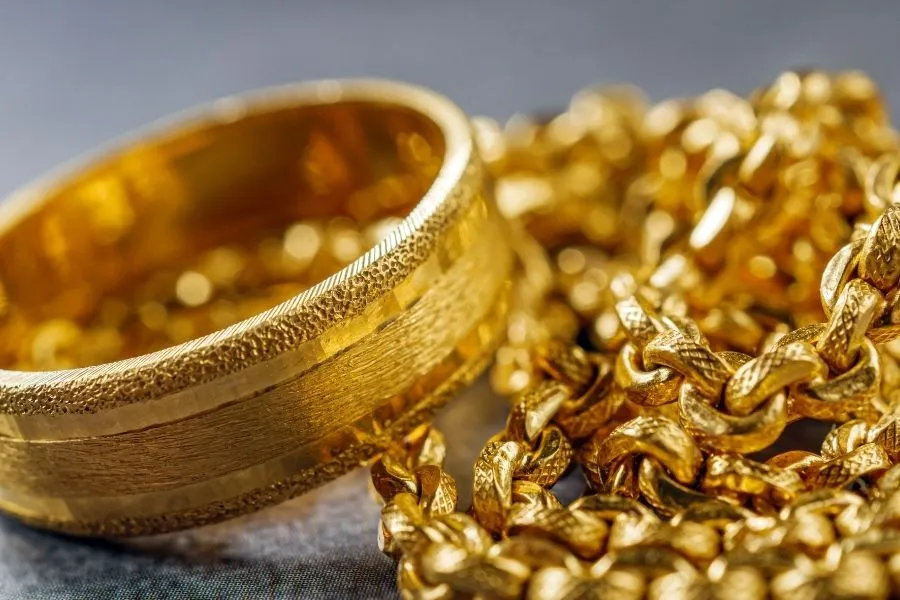
Gold purity is the proportion of an item made from actual gold rather than alloy metals such as copper, silver, nickel, palladium, or zinc. It is expressed in karats or fineness. For Las Vegas sellers, purity must be considered together with verified weight, current gold pricing, item type, gemstones, condition, brand, and resale demand before an accurate purchase offer can be calculated.
Key Takeaways
- Gold purity measures how much actual gold an item contains.
- Karat uses a 24-part scale, while fineness expresses purity in parts per thousand.
- Common jewelry marks include 10K, 14K, 18K, 22K, 417, 585, 750, and 916.
- Higher-karat gold contains more gold per gram, but purity alone does not determine the total value of an item.
What You’ll Learn
Understanding gold purity is essential because it directly affects both the value of your item and the amount you can expect to receive when selling it. Higher-karat gold contains a greater percentage of pure gold and typically commands a higher price, while lower-karat pieces are more durable but contain more alloy metals and therefore have a lower intrinsic value.
Professional buyers evaluate purity before determining an offer, combining those results with the item’s weight and the current market price of gold to calculate its worth. If you’re preparing to sell, our guide on Selling Gold explains what to expect throughout the appraisal process and how gold buyers determine fair market value.
What Gold Purity Actually Means in Simple Terms
Simply put, gold purity describes how much of an item is made from real gold versus other metals. Since 24-karat gold is very soft, manufacturers often mix it with alloys to create jewelry and other products that can withstand everyday wear.
The more pure gold an item contains, the greater its intrinsic value, while lower-purity gold offers increased durability at the expense of gold content. This balance is why different purity levels are used for everything from fine jewelry to investment bullion and collectible coins.
Gold Purity Scale (Karat System Explained)
Gold purity is measured using a 24-point karat scale, where 24K represents nearly pure gold. Most commercial jewelry contains mixed alloys for durability, which lowers karat value but improves strength.
Gold Purity Comparison Table
| Karat | Purity % | Composition | Common Use | Value Level |
| 24K | 99.9% | Pure gold | Bars, coins | Very high |
| 22K | 91.7% | Gold + alloys | Traditional jewelry | High |
| 18K | 75% | Gold + metals | Luxury jewelry | High |
| 14K | 58.3% | Mixed alloys | Everyday jewelry | Medium |
| 10K | 41.7% | Mostly alloys | Budget jewelry | Lower |
To understand the real differences between karat levels like 10K, 14K, 18K, and 24K in more detail, you can read our gold purity guide.
How Gold Purity Affects Value When Selling
Gold purity is one of the biggest factors buyers consider when determining how much your gold is worth. The amount of pure gold contained in an item, its total weight, and the current market price all work together to determine its resale value.
Buyers also evaluate the type of item you’re selling, whether it’s jewelry, bullion, coins, or scrap gold, since each category is valued differently. Even two pieces that weigh the same can receive very different offers if one contains a higher percentage of pure gold.
If you’d like to learn more about maximizing your payout, our guide on How to Get the Best Value When Selling Gold and gold fineness explains additional factors that can influence your offer.
How Gold Buyers Test Purity
Professional gold buyers use several testing methods to verify authenticity and accurately determine an item’s karat before making an offer.
- Electronic gold testers measure conductivity.
- Acid tests help confirm karat levels.
- X-ray fluorescence (XRF) scanners analyze the metal’s composition without causing damage.
- Simple magnet tests can identify counterfeit or heavily alloyed items.
At Las Vegas Jewelry & Coin Exchange, every item is tested in front of the customer so you can see exactly how your gold is evaluated before receiving an offer.
Why Gold Purity Changes Between Jewelry and Bullion
Not all gold products are made to the same purity standards. Investment-grade bullion and many gold bars are manufactured with extremely high purity because their primary purpose is preserving value.
Jewelry, on the other hand, is typically mixed with other metals to improve strength and durability for everyday wear.
Gold coins often follow standardized purity requirements established by their issuing mints, while scrap gold is valued based on the amount of recoverable gold it contains.
These differences explain why two items of similar weight can have very different resale values.
Factors That Can Lower Gold Purity Value
Even genuine gold may receive a lower offer depending on its composition and condition. Lower-karat pieces contain a greater percentage of alloy metals, reducing the amount of pure gold available for resale. Plated or gold-filled items are worth considerably less than solid gold, while pieces with missing hallmarks or uncertain purity often require additional testing before they can be accurately valued. Buyers also account for non-gold materials such as gemstones or decorative components that don’t contribute to the item’s melt value.
Why Purity Matters More Than Weight
Many sellers assume that weight is the primary factor determining value, but purity often has an even greater impact. For example, an 18-karat gold necklace contains substantially more pure gold than a 14-karat necklace of the same weight, resulting in a higher payout when market prices are equal. Understanding this relationship helps sellers better estimate what their jewelry, coins, bullion, or scrap gold may be worth before seeking an appraisal.
How Las Vegas Jewelry & Coin Exchange Evaluates Gold Purity
Every gold evaluation at Las Vegas Jewelry & Coin Exchange follows a transparent process designed to provide accurate pricing and complete confidence. Each item is carefully inspected, weighed, electronically tested, and verified for purity before its value is calculated using the current market price of gold.
Throughout the evaluation, customers can see how each step contributes to the final offer, ensuring there are no surprises.
Understanding Your Gold’s True Value
Gold purity forms the foundation of every accurate appraisal because it determines how much pure gold an item actually contains. While weight, market conditions, and the type of item all influence the final offer, purity remains the single most important factor in calculating value. That’s why reputable buyers verify each item before making an offer rather than relying on estimates or assumptions.
If you’re selling gold in Las Vegas, having your jewelry, coins, bullion, or scrap gold professionally tested provides the clearest picture of its current market value. At Las Vegas Jewelry & Coin Exchange, every evaluation is performed using transparent testing methods and real-time gold prices so you understand exactly how your offer is calculated.
Contact our professional team today.
Frequently Asked Questions
How can I tell what karat my gold is?
Look for a hallmark such as 10K, 14K, 18K, 22K, 417, 585, 750, or 916. Because markings can be missing or inaccurate, the most reliable approach is to have the item professionally tested.
Is 18K gold worth more than 14K gold?
An 18K item contains a higher percentage of gold than a 14K item. If two items have the same weight and are valued only for gold content, the 18K item will generally have a higher intrinsic value. Total weight and other value factors must still be considered.
What does 585 mean on gold jewelry?
A 585 mark means the item is approximately 58.5% gold, which is generally equivalent to 14K. The remaining portion consists of alloy metals.
Can a magnet determine whether gold is real?
No. A magnet may identify certain non-gold components, but it cannot establish purity or prove authenticity. Many counterfeit metals are nonmagnetic, while genuine jewelry may contain magnetic hardware.
Does XRF testing damage gold?
XRF is generally considered a nondestructive method of analyzing elemental composition. Because it evaluates the tested surface, results may need additional interpretation when an item is plated, layered, or treated.