
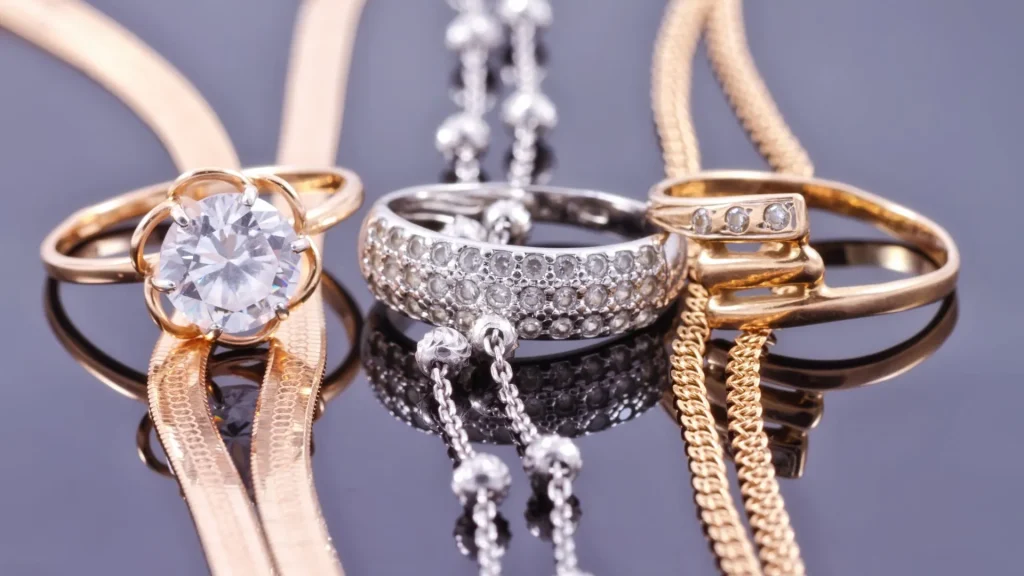
Platinum and white gold can look nearly identical, but they differ in composition, purity, density, color, maintenance, and resale value. Platinum jewelry is commonly made with 90% to 95% platinum, while white gold contains gold mixed with lighter-colored alloy metals. In July 2026, gold traded substantially above platinum per troy ounce, so white gold could have a higher melt value at the same item weight. The actual offer still depends on purity, total weight, gemstones, brand, condition, and resale demand.
Key Takeaways
- Platinum jewelry is typically about 90% to 95% pure platinum.
- White gold is an alloy made by mixing gold with metals such as nickel or palladium.
- Platinum is about 60% denser than gold, which contributes to its heavier feel.
Why Platinum and White Gold Get Confused
Platinum and white gold can both appear bright white, especially when white gold is rhodium plated. That similarity leads many sellers to mislabel their jewelry, and the wrong label can lead to the wrong expectations when you walk into a buyer.
If you’re selling estate pieces or inherited jewelry, the confusion happens even more often because paperwork is missing and hallmarks may be worn. The good news is that most of the time you can narrow it down quickly using stamps, weight, and professional testing.
Check the Hallmark First (Fastest Method)
Start by checking for stamps inside the band, on the clasp, or on the back of the piece.
Common platinum hallmarks:
- PT
- PLAT
- 900
- 950
- 950 PLAT
Common white gold hallmarks:
- 10K / 14K / 18K
- 417 / 585 / 750
- WG (sometimes)
If you want a broader guide on reading marks and spotting plated jewelry, see: How To Tell if Jewelry Is Real.
Use Weight and “Feel” as a Clue
Platinum is much denser than gold alloys, so platinum rings often feel noticeably heavier than a similar-looking white gold ring. This isn’t a perfect test, but it’s a strong clue—especially for solid bands.
That “heavy for its size” feeling is one reason platinum jewelry can surprise sellers when it’s properly identified and tested. If you think your ring is platinum because it feels heavy but you can’t find a stamp, bring it in for testing rather than relying on appearance.
Look for Rhodium Wear (White Gold Giveaway)

Many white gold pieces are rhodium plated to look brighter and whiter. Over time, that plating can wear down, and you may see:
- Slight yellowing near the bottom of a ring
- Yellow-ish tones on edges or high-wear areas
- Uneven color where the plating has thinned
Platinum does not rely on rhodium plating to maintain its white color, so it won’t “turn yellow” in the same way. If you see yellow showing through, it usually points toward white gold, not platinum.
How Buyers Test Platinum vs White Gold
A reputable buyer won’t guess—they’ll test. Las Vegas Jewelry & Coin Buyers notes they buy both jewelry and industrial platinum and frequently pay well over the platinum price for jewelry-grade pieces.
Common evaluation steps you’ll see:
- Hallmark inspection and visual review
- Precision weighing
- Metal testing/assay to confirm type and purity
- Separate diamond/gem evaluation if stones are present
If your piece includes diamonds, the offer may be influenced more by the stones than the setting, so it helps to understand what impacts value on the Diamond Information page.
Which Pays More When Selling: Platinum or White Gold?
It depends on what you have, but the key takeaway is this: platinum and white gold are priced differently because they’re different metals with different purity standards, weight, and market behavior.
Platinum jewelry can sometimes command strong offers—Las Vegas Jewelry & Coin Buyers states they “frequently pay well over the platinum price for jewelry,” especially for jewelry-grade platinum pieces. White gold value is usually driven by karat (10K/14K/18K), weight, and whether the piece is bought as scrap vs resold.
If your item is designer, antique, or an estate piece, it may be evaluated as jewelry rather than scrap, which is why the Fine Jewelry page is useful context before you sell.
Common Mistakes That Cost Sellers Money
- Assuming “white metal = platinum.”
- Ignoring stamps because they’re faint (use a phone camera zoom or a loupe).
- Not separating metal value from diamond value.
- Taking one offer only on a high-value piece.
When to Get an In-Person Evaluation
Get an in-person evaluation if:
- The hallmark is missing or worn down
- The ring is heavy but you can’t confirm metal type
- The piece has diamonds or multiple stones
- It’s vintage/estate and you suspect it may be platinum filigree or Art Deco
If you’re ready to bring your piece in, start with the platinum page for details and then reach out through the Contact page.
Ready to get a free appraisal? Visit Top Vegas Buyer in Henderson.
Frequently Asked Questions (FAQ)
Can White Gold Be Stamped “PLAT”?
It shouldn’t be, if you see “PLAT,” “PT,” “950,” or “900,” treat it as a reason to test the piece instead of assuming. Check at Las Vegas Jewelry and Coin Buyers for accurate information.
What If My Ring Is Platinum but Has No Stamp?
Will At-Home Tests Damage My Jewelry?
Can Las Vegas Jewelry and Coin Buyers Test and Evaluate My Item In Person?
Do You Charge Any Appraisal or Evaluation Fees?
No. Las Vegas Jewelry and Coin Buyers states that appraisal services are complimentary and there are no evaluation fees before an offer is presented. For more information visit our FAQ page.